
Introduction to Digital Marketing
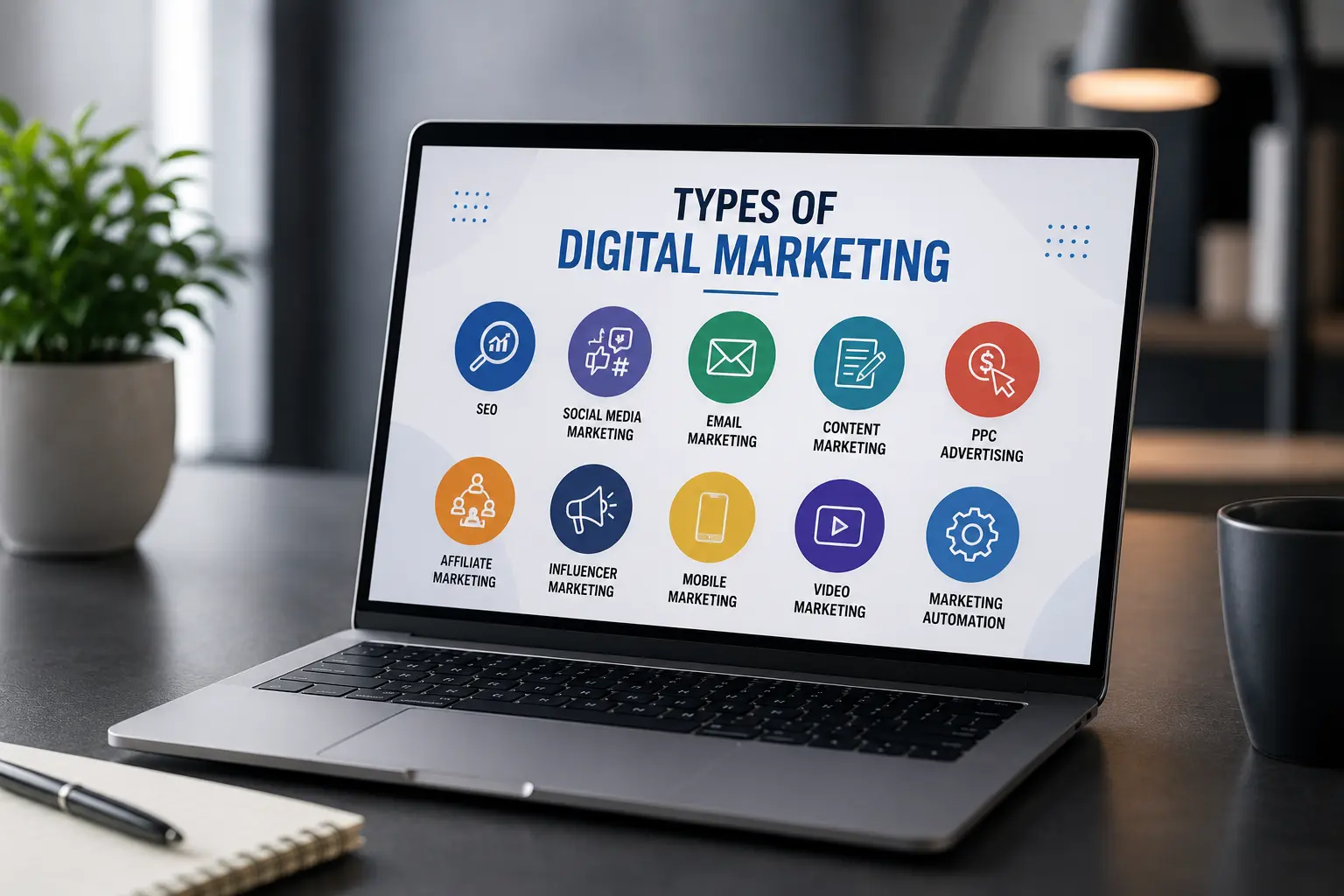
In today’s internet-driven, fast-paced world, digital marketing has become the cornerstone of commercial operations. Every online activity, including Google searches, Instagram browsing, YouTube video viewing, and email checking, gives businesses the chance to engage with consumers. Digital marketing enables firms to communicate with accuracy and relevance, in contrast to traditional marketing, which frequently depends on broad message. Building relationships, comprehending consumer behavior, and assisting consumers on their path to trust and ultimately conversion are much more important than simply selling. Although they may not be the largest, companies who are adept at digital marketing are frequently the most strategic, quickly adjusting to changing consumer demands and trends.
Search Engine Optimization (SEO)
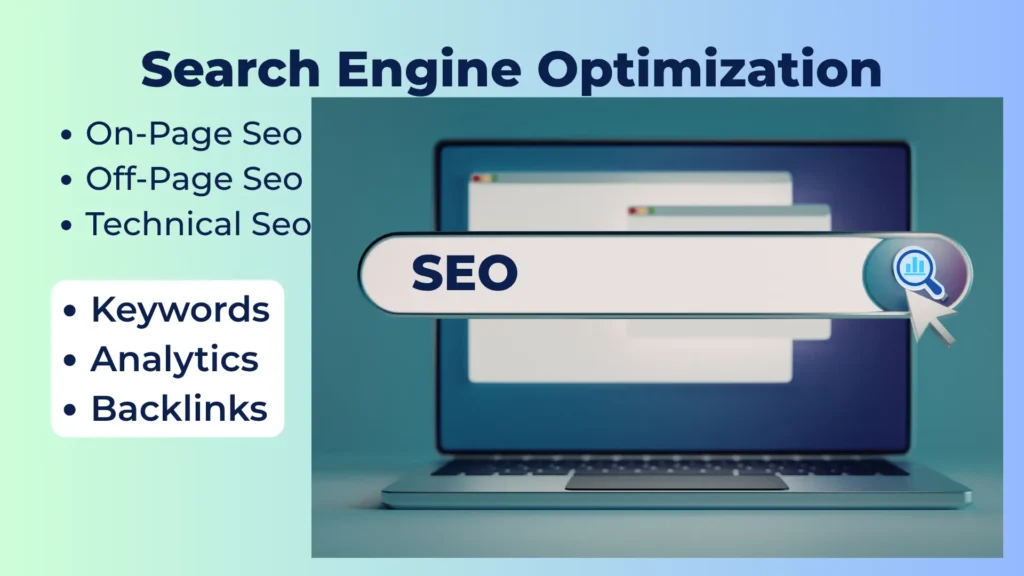
One of the most effective and long-lasting digital marketing techniques is search engine optimization, or SEO. It focuses on making a website more visible in search engine results so that it shows up at the top when visitors search for pertinent keywords. SEO is more than just adding keywords to content; it also entails figuring out what users are searching for and offering pertinent, useful material that meets their demands. A well-optimized website can get steady, high-quality traffic without requiring ongoing advertising expenditures. Over time, SEO increases authority and trust, which facilitates the development of a strong online presence for firms.
On-Page SEO
Optimizing website components to raise search engine results and enhance user experience is known as “on-page SEO.” This entails producing excellent content, utilizing keywords organically, optimizing headlines, and making sure that pages are user-friendly. Delivering value to the user, however, is the true goal of on-page SEO. Visitors are more inclined to stay longer and interact with the website when they find material that effectively and simply answers their questions. Higher rankings may result from this activity, which tells search engines that the information is helpful. The main goal of on-page SEO is to produce content that appeals to both search engines and people.
Off-Page SEO
The goal of off-page SEO is to increase a website’s authority from outside sources, usually backlinks from other websites. These hyperlinks serve as recommendations, telling search engines that your material is reliable and worthwhile. But the quality of backlinks matters more than their quantity. Links from reliable and pertinent websites are given greater weight and have the potential to greatly raise search engine results. Brand mentions, social media sharing, and online reputation management are further components of off-page SEO. These components work together to build credibility and improve your ranking in search engine results.
Technical SEO
Technical SEO ensures that a website is structured in a way that allows search engines to crawl and index it effectively. This entails maintaining a secure connection, repairing broken links, optimizing site speed, and guaranteeing mobile compatibility. In addition to raising search engine rankings, a well-designed website also improves user experience. For instance, a website that loads quickly keeps users interested, whereas one that loads slowly discourages them. Although visitors may not always be able to see it, technical SEO is essential to a digital marketing strategy’s overall effectiveness.
Social Media Marketing
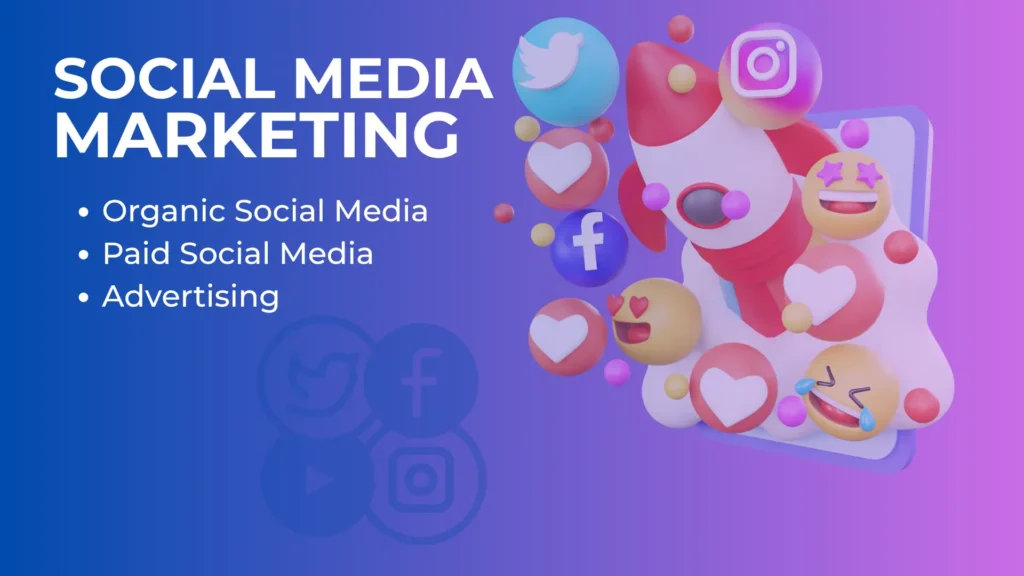
Through social media sites like Facebook, Instagram, LinkedIn, and TikTok, businesses may establish a more intimate connection with their audience. Social media enables direct engagement, which makes communication more dynamic and interesting than traditional marketing. Companies can interact with their audience in real time, share material, and reply to comments. Long-term success depends on the development of trust and loyalty, both of which are facilitated by this connection. Social media marketing involves more than simply product promotion; it also involves developing a brand identity that appeals to consumers.
Organic Social Media
The goal of organic social media is to develop a following organically by regularly posting insightful and interesting material. Posts, narratives, videos, and conversations that don’t contain paid advertising fall under this category. Organic social media creates a devoted following that has faith in the company, even though it could take some time to develop. Higher involvement and greater long-term outcomes are frequently the results of this trust. Because consumers value real relationships, companies that engage in relevant and authentic content typically see improved performance.
Paid Social Media Advertising
By promoting posts or running advertisements, paid social media advertising enables businesses to swiftly reach a focused audience. These advertisements are quite effective since they can be tailored according to user behavior, interests, and demographics. Increasing brand exposure, producing leads, and creating instant traffic are all made possible by paid advertising. By increasing reach and quickening growth, it supports organic initiatives.
Content Marketing
The main goal of content marketing is to draw in and keep an audience by producing and disseminating useful content. It seeks to offer useful information that develops authority and fosters confidence rather than concentrating on straight sales. Stronger bonds and increased conversion rates result from this trust over time. Blogs, videos, infographics, and other types of content marketing are all intended to inform or amuse viewers.
Blogging
A key component of content marketing that enhances SEO and increases organic traffic is blogging. Businesses can answer frequently asked questions and offer their readers answers by crafting in-depth and educational articles. In addition to drawing readers, a well-kept blog establishes the company as an authority in its industry.
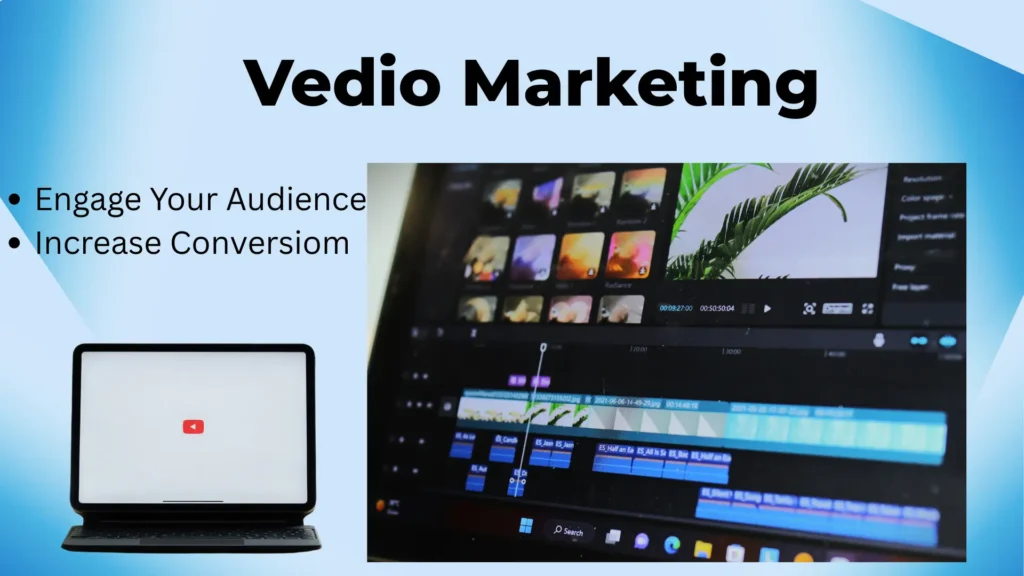
Video Content
The potential of video content to blend graphics and narrative has made it one of the most captivating types of digital marketing. Short-form videos, product demos, and tutorials all immediately grab viewers’ attention and hold it longer than text alone.
Pay-Per-Click Advertising (PPC)
By putting advertisements in front of people who are actively looking for goods or services, PPC advertising offers instant visibility. For new firms in particular, it is a successful method of producing rapid traffic and leads.
Google Ads
Businesses may target people with strong purchase intent by using Google Ads to show up at the top of search results. It is therefore among the most potent platforms for advertising.
Display Advertising
Visual advertisements are used in display advertising to reach a wider audience on websites and applications and raise brand awareness.
Affiliate Marketing
By collaborating with people who market their goods in exchange for a commission, affiliate marketing enables companies to reach a wider audience. This performance-based paradigm raises exposure while lowering risk.
Email Marketing
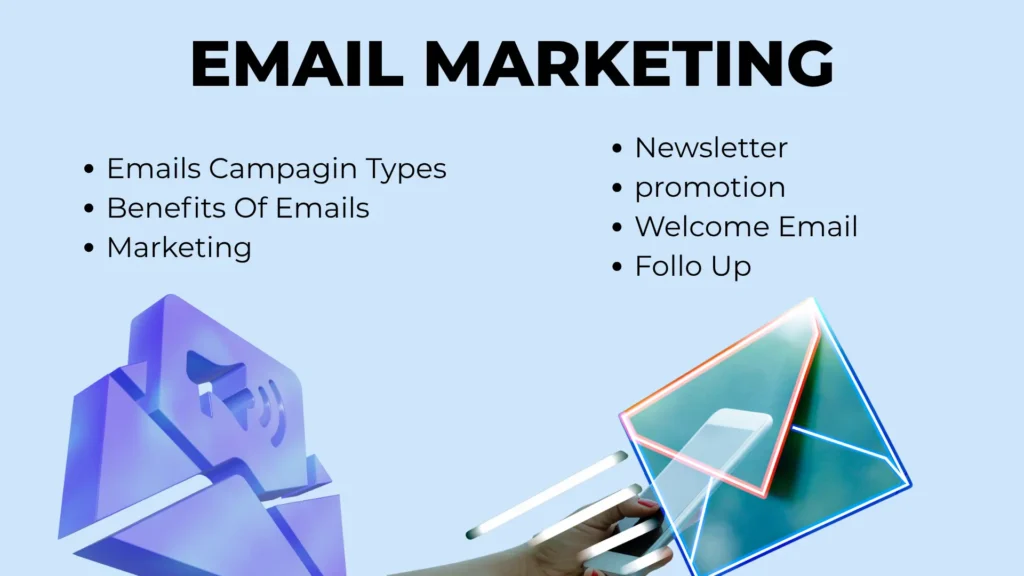
Businesses can interact directly and individually with their audience through email marketing. It is among the best strategies for retaining client relationships and nurturing leads. Email guarantees that your message reaches your audience directly, in contrast to social media, where visibility is controlled by algorithms.
Email Campaign Types
Email campaigns can be used for a variety of objectives, such as automatic sequences for onboarding new clients, newsletters for updates, and promotional emails for sales. Every kind has a part to play in helping users navigate the customer journey.
Benefits of Email Marketing
Because email marketing is extremely targeted and affordable, it provides a high return on investment. It enables companies to establish enduring connections and keep up regular communication with their target audience.
Affiliate Marketing
By collaborating with people who market their goods in exchange for a commission, affiliate marketing enables companies to reach a wider audience. This performance-based paradigm raises exposure while lowering risk.
Influencer Marketing
Influencer marketing entails working with people who are well-known online. Their recommendations are very successful at fostering trust and increasing sales because they frequently feel more genuine.
Mobile Marketing
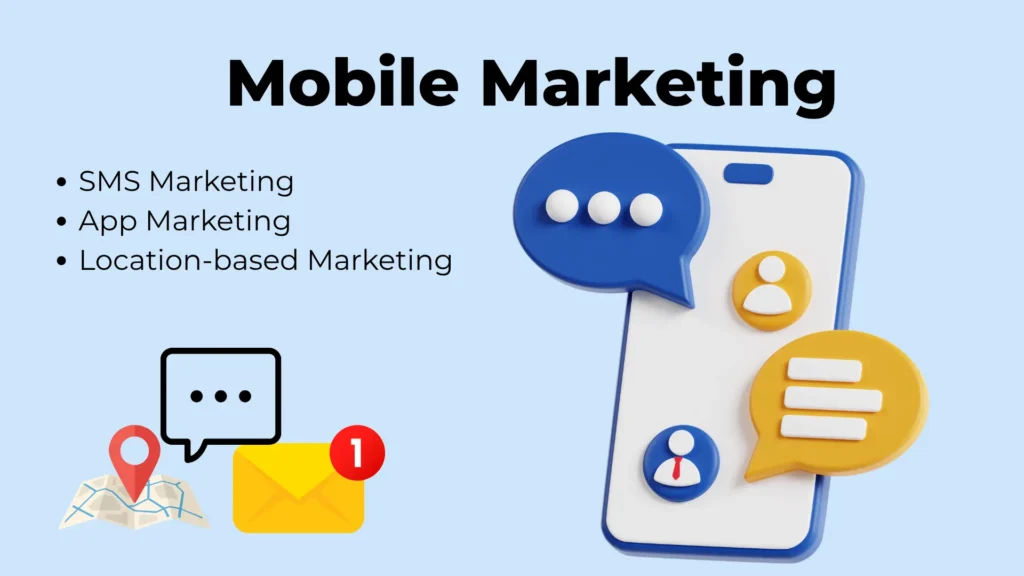
Reaching consumers via smartphones is the main goal of mobile marketing, which makes sure that information is mobile-friendly and tailored for smaller screens.
Online Public Relations (PR)
Through digital channels like reviews, media attention, and online mentions, online PR assists in managing a brand’s reputation.
Marketing Automation
By using tools to automate repetitive operations, marketing automation increases productivity and guarantees regular customer communication.
Choosing the Right Digital Marketing Strategy
Understanding your audience, objectives, and financial constraints is essential to choose the best course of action. The finest outcomes are frequently obtained by combining several techniques because each kind of digital marketing complements the others.
Conclusion
A potent blend of tactics, digital marketing helps companies expand and prosper in a cutthroat industry. Businesses can establish long-term success and solid relationships with their audience by comprehending each category and using them successfully.
The advertising of goods and services through internet channels and digital technologies is known as digital marketing.
Because of their long-term advantages, SEO and social media marketing are excellent places to start.
SEO typically takes 3 to 6 months to show noticeable results.
It can be economical, particularly when employing tactics like content marketing and SEO.
Yes, with consistent practice and learning, anyone can develop digital marketing skills.